Jake Bugg - A Modern Day Distraction
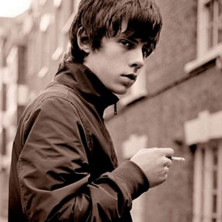
“Man, I’ve had it up to here – trashed my hopes and fed my fears ,” spits Jake Bugg on ‘Instant Satisfaction’’ – the polemic centre-piece that gives its name to the Nottingham troubadour’s fiery and engaged sixth album: ‘A Modern Day Distraction’. “And if it was up to me, I’d wish away all the greed – how much do we really need?”
As Bugg puts it, it’s a punchy state-of-the-nation lament for the most in-need, looking for anything to lift them out of the pummeling trudge of the everyday. “We’re taught as young children that we’re supposed to be equal, then you grow up and realise we’re not,” says Bugg. “People choose not to point the finger where it should be pointed. Instead, they go for the easier target. That’s unjust to me. In Britain, you get punched in the face and go, ‘Ah, that’s the way it is’. You’re supposed to suck it up and get on with life. ‘It could be worse’, they say.”
Refusing to bury his own head in the sand, Bugg’s back with a return to his roots on the shamelessly rock-driven ‘A Modern Day Distraction’ – a record that turns up the noise while shining a light on the injustice he’s seen dealt to the family and friends he grew up with.
His previous album, 2021’s glitterball shimmer of the pop-leaning ‘Saturday Night, Sunday Morning,’ saw Bugg looking to the dancefloor for a little escapism. Now, he’s back down on Earth. “The last record was fun, but it showed me more of what I should be doing – and that’s going back to the things I love and enjoy the most. I feel like I’m more in my element on this record.”
You hear that off the bat with the manifesto-setting launch single ‘Zombieland’. A bone-crunching Beatles-via-Nirvana riff sees in a rollicking ode to the many broken by the inescapable daily grind, trudging on with a stiff upper lip: “He knows the price he has to pay,” warns Bugg on the chorus. “It hurts but he’s too proud to say”.
“It’s fucking brutal,” he says of the people he’s known who exist in “a constant cycle of working to live”. “They’re not paid what they’re worth. People have the same routine every day, they’re at work more than they see their kids, then the government puts the retirement age up. It’s not right.”
The album took surprising inspiration from Green Day’s 2004 pop-punk opus ‘American Idiot’ in how it magnified ordinary frustrations into the extraordinary. “It might have seemed ridiculous when Billie Joe Armstrong wrote it, but he told the truth and people believed him,” recalls Bugg. “I watched that Milton Keynes live film [‘Bullet In A Bible’] recently and I realised: they were honest, showed humility and it became massive for a reason.”
With his songs born out of a similar “frustration of societal inequality”, Bugg found that a time had come when he just couldn’t look away. “People might say ‘What do you know?’ or ‘Just stick to music’. I’ve got a bit of money, but we all know the people this affects. I was just writing it because it was the way I felt. It pisses me off – especially in a country like ours where we have the means and funds to take care of the people suffering the most, but we choose not to.”
“You can’t go through life giving yourself an easy ride and ignoring it. The task is not to come across as preachy and condescending – which is very easily done. That’s why I’m writing about other people’s stories and through other people’s eyes.”
While lightyears from the same full-blown rock opera scale of ‘American Idiot’, ‘A Modern Day Distraction’ is a concept album “in some ways”, Bugg confesses. “These are stories of my life, people I know, and people I’ve observed. All of the stories and characters intertwine.”
Admitting his own unreal luck as an artist who emerged Clifton (the biggest council estate in Europe) to now be doing alright for himself in a world where “most people don’t have the luxury or opportunity to do what they really want”, Bugg says that he hopes the record provides a bridge through the universal troubles we all face. Check out The Clash and Jam-indebted mod rock burst of ‘All Kinds Of People’ that signposts: “We’re all trying just to find our way every day.”
“We all have our struggles,” says Bugg. “In British culture, we don’t really talk to anyone about that. You need to talk about these things with the people you love. We have to try and help each other, because there’s not much help out there.”
There’s a need for purpose and togetherness at the heart of ‘A Modern Day Distraction’. ‘All That I Needed Was You’ is about finding your centre when you’re spinning out of control – that thing or person that matters the most – while ‘Never Said Goodbye’ looks back on a tough year when Bugg lost two people very close to him. “That song is about realising how lucky you were to know those people in the first place,” he says. “It’s a message to the person you’ve lost that you’re still thinking about them.”
The aforementioned ‘Instant Satisfaction’ is about those little things we all need to “take ourselves away from reality and the bad day we’ve had” – whether a vice, bad TV or social media, not that he’s judging. He’s unsure how he’d fare if we were to emerge today in this era of TikTok and endless content. That’s not to say he lives in the past. While it's now 12 years and five albums since he emerged with his streetwise and spritely, Mercury-nominated, chart-topping, Noel Gallagher-approved, self-titled debut, one might forget he was just 18 at the time. He’s put in the hours and achieved so much but he’s only 30 and still seeing the front rows of his shows getting younger.
In that spirit, Bugg still feels his best work is ahead of him: “You just have to put your songs out into the universe and hope for the best.”
Fresh from a “wicked” and “inspiring” tour as special guest to Liam Gallagher & John Squire throughout the UK and Europe, Bugg is recharged and raring for what lays ahead – a testament to the tenacity shown on the album. The rattling blues of ‘Breakout’ tell that familiar tale of the kid “all mixed up and all alone, a prisoner in his own home” in a forgotten town but ultimately promises that “something’s gonna change”. There’s light at the end of ‘I Wrote The Book’ as he offers, “you’ve gotta live your life before you're dead and gone,” while the heartfelt ‘Keep On Moving’ is pretty self-explanatory. “Whatever’s thrown at you, you’re going to have things you regret, you’re going to have demons following you around, you’ve just gotta run with it,” ends Bugg. “You can’t let it hold you back.
“There has to be something reborn, otherwise you’re just telling people what they know. You have to give people hope.”
Billie Marten
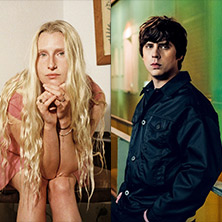
Billie Marten’s parents did not pretend to like Dog Eared, her fifth album but the first where she begins to tease out the trails and trials of adulthood. They were only two tracks in when a bit of dissonance brushed awkwardly against their ears, 1 minute and 50 seconds into “Crown”—“The minute you are gone/I lose where I belong,” Marten sings, holding that final forlorn note as the band bends slightly away in a sly bit of text painting. They called their daughter and admitted they didn’t really get it. How had the soft-voiced singer who had become a British teenage star gotten here, singing about addictions and neuroses above notes that didn’t seem to make sense? Sure, Marten was disappointed. But there was certainly some degree of delight, too, because it was suddenly clear she’d accomplished what she hoped to do with Dog Eared all along. She had slipped the stereotype of her past and, at last, made more than a merely pretty record.
The first time Marten and producer Phil Weinrobe spoke by phone, sometime in the summer of 2023 as she drove aimlessly through the Yorkshire Dales, they realized they shared a vision for what her next record wouldn’t be: another singer-songwriter album. That is, they didn’t want to recruit a band of beyond-capable aces only to ask them to stay out of the way, to support the songs rather than express themselves. Marten had spent the first decade of her career making music that put her in that silo, and, as she neared her mid-20s, the claustrophobia only intensified. Patient and restrained, full of the space for which she yearned, Dog Eared is her entirely successful first step beyond it and into a record where songs become places for players to interact with Marten, where they tease out in real time what they are trying to say together. Marten’s singing has never been more nuanced or versatile than it is here, her songwriting never more rich or poignant. But on Dog Eared, she is simply and happily the band member who happens to write and sing, surrounded by an elite crew responding as she goes.
In July 2024, Marten flew to New York to try an entirely new way of working. In the year since their first talk, Weinrobe methodically built a band he felt would fit Marten’s demos. Vishal Nayak and Joshua Crumbly became the elastic rhythm section, supplying muted soul and subtle momentum. Weinrobe gathered a little fleet of guitarists—Michael Haldeman, Sam Evian, Adam Brisbin—and recruited keyboardist and pianist Michael Coleman, too. He also arranged for guests to drop in: singer and guitarist Núria Graham (whose 2023 LP, Cyclamen, had become a touchstone), superstar percussionist Mauro Refosco, Sam Amidon with his fiddle, Shahzad Ismaily with whatever spoke most to him in the moment.
Everyone heard the same edict anew: They had not sequestered themselves in Weinrobe’s Sugar Mountain studio during a steamy Brooklyn summer to make a singer-songwriter record. Play to and in the moment, he said, with each other. They would all perform together live, capturing human takes and not overdubbed perfection. Marten would mostly sing, another compelling instrument in a sterling ensemble. Her songs, Weinrobe reckoned, were strong enough to take care of themselves.
He was right. These 10 tunes remain perfect snapshots of Marten’s Gemini mind (in spite, mind you, of her astrological reluctance), as she both reconnects with the childhood that predates her early career and turns toward her own self-made future. Hanging on her every word and vocal turn, the band around her enhances and deepens them. Hear, for instance, the way the group first kicks up little clouds of dust during opener “Feeling,” then eases back beneath her, like a pillow meant to lift Marten. It is a song about the tenuousness of our existence, about how the divide between our most sacred memories (for her, her father’s large hands or playing on her grandmother’s rugs) and a permanent void is beyond razor-thin. “We are oh so lightly here/Softer than a rabbit ear,” she sings, the band pulling back again as if struck by her epiphany about how little we can actually know. They are, however, almost effervescent during “Clover,” an oxymoron-laden drifter about trying to parse left from right, up from down, reality versus delusion. Every time it arrives, the refrain—“I’m way above the atmosphere/I stare at cracks, and they disappear”—feels like a sunrise or a flower unfurling, any hard-won moment of briefly getting life right.
Where closer “Swing” is a wondrously ragged country-folk anthem about anticipating oblivion that suggests Big Thief sitting in with The Breeders, “Planets” is a brilliant pop paean to the possibilities of the future. Here is the promise of growing “grey and old” with someone else as the rest of the world spins toward chaos, rendered with the thoughtful care of Leslie Feist and Françoise Hardy.
The irrepressible “Leap Year” lingers in the space between those two, suspended forever among past, present, and future. Written on Leap Day in 2024 while Marten wrestled with winter malaise in bed, her first non-autobiographical song considers a couple who can only rendezvous every four years, on our astronomical makeup day. They long for the future but cling to the moments they have. After she rewrote the second verse in Sugar Mountain’s stairwell, the band played the revamped song for the first time while Marten sang. That take is the centerpiece of Dog Eared, with Sam Evian’s epochal guitar solo perfectly framing a couple trying to feel their way forward while knowing they are destined to fail.
Marten loves to leave her mark on a good book—underlining important passages, scribbling ideas in the margins, folding the corners of pages into dog ears to mark her place. The 10 songs of Dog Eared serve that purpose, telling the story of who she was as she wrote and recorded it, cleaving her adolescence from her adulthood in order to move forward. She is the songwriter who finds wisdom in horses and encourages self-reflection while realizing she has barely begun her own. She is the singer who makes the chorus of “Goodnight Moon” as beautiful as a lunar corona and smartly lets dissonance slip between her voice and the band around her as she watches something she loves disappear during “Crown.” (Her parents, mind you, have come around. Dog Eared’s charms are, ultimately, that undeniable.) Marten is a consummate singer-songwriter who has dared to push beyond the limitations of that form and make a stunning record that marks a new page, suggesting what comes next through the strength and beauty of what’s right here.